
Why All Of Delhi Adores Lodhi Gardens! So Delhi
Ongoing archaeological and architectural research continues to reveal new information about the monuments and their historical context, contributing to broader understanding of Delhi's medieval period. Future planning must consider how to preserve the gardens' essential character while adapting to changing urban conditions and visitor needs. The gardens' management must balance heavy visitor use with conservation needs, ensuring that recreational activities don't damage the landscape or disturb wildlife. Weekday visits generally provide more tranquil experiences with fewer crowds, while weekend visits offer opportunities to observe the gardens' role as a community gathering place. The gardens provide basic facilities including clean restrooms, drinking water fountains, and seating areas throughout the park. The gardens can become crowded during weekends and holidays, so weekday visits often provide more tranquil experiences for those seeking peace and contemplation.

Places to Visit
Another nearby station to Lodhi Gardens is the JLN metro station on the violet line that connects Raja Nahar Singh To Kashmere Gate Metro Station. The nearest metro station to Lodhi Gardens is Jorbagh metro station on the yellow line that starts from Samaypur badli station to Huda City Centre Metro Station. Lodhi Gardens can be easily reached by road as well as metro rail. Lodhi Gardens consists of a rose garden, a lake and a Greenhouse which is in addition to the wide variety of trees and plants.
- It is not a very budget friendly area but sometimes you do just need to treat yourself!
- “The Delhi Walla is Delhi’s most idiosyncratic and eccentric website, and reflects a real love of this great but under-loved and underrated city.”
- You can also take an auto or cab to reach the park.
Lodhi Garden Delhi: A Break-Down
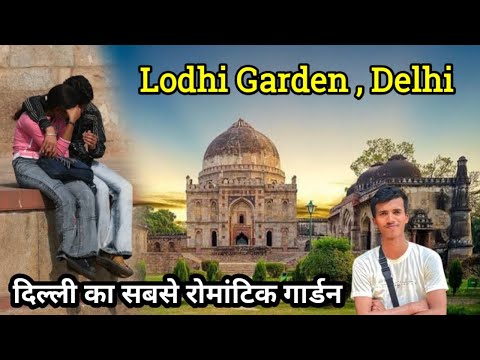
Delhi is famous not only for quila’s, temples, and Lodhi Garden forts butalso famous for its garden all around. Lodi garden is a good picnic spot for the local people and good hotspot for morning walk and students alike. The architecture is in sync with nature and manmade beauty. Hence after theinauguration in the year 1936 it was also named as Lady Willingdon park. During the British period the gardenwas further beautified.
Instead of thinking of Lodhi Garden as just a park, this article tries to suggest that we see it as a “cultural landscape”—a space where nature and human history exist in constant, meaningful dialogue. Rather than viewing it solely as a park, this article interprets Lodhi Garden as a “cultural landscape”—a term that reflects the ongoing interaction between human activity and natural elements over time. Visible from Sikander's tomb is the Athpula ('eight-piered') Bridge, one of the few monuments in Delhi that was built during the reign of Mughal emperor Akbar. In the middle of the gardens is the Bara Gumbad (lit. 'big dome'), consisting of a large rubble-construct dome and is not a tombbetter source needed but was constructed as a gateway to either the attached three domed masjid (mosque) or a large walled enclosure.
In 1968, American landscape architect Joseph Stein was commissioned to redesign Lodhi Gardens once again. After India gained independence in 1947, there was a renewed interest in preserving cultural heritage sites like Lodhi Gardens. However, their approach often involved a Western perspective on conservation that sometimes clashed with local traditions. The park was designed not just as a recreational space but also as a venue for social gatherings and events. While this beautification process aimed at enhancing public enjoyment, it also led to significant alterations in the original landscape that had historical significance.
Things To Do In New Delhi

Are pets allowed inside Lodhi Garden? Is there an entry fee for Lodhi Garden? You don’t have to pay anything to enter Lodhi Garden! The morning time is super special.
- The earliest structure within Lodhi Gardens is the tomb of Mohammed Shah, built in 1444 by his son, Ala-ud-din Alam Shah.
- The tomb’s facade bears testament to the craftsmanship of the era, with intricate geometric patterns and inscriptions adorning its surfaces.
- Get to the gardens for walks, a run or simply to spend time with nature.
- 80 Places to visit around Delhi to gain some unforgettable experience
- Just 1.4 km away, the other nearby metro station is the JLN metro station on the Violet Line.
From there, you can take an auto-rickshaw or a cab to Lodhi Garden. It has four arched openings on each side that lead to the tomb chamber. The mosque is one of the finest examples of Lodi architecture, with five arched openings and three domes. It is a rectangular tomb with a dome that rests on 16 pillars. It is an octagonal tomb with a dome that rests on eight pillars. According to legend, Sikandar Lodi used to hold court under a large tree in Lodhi Gardens, which is still standing today.