
Yadavindra Gardens, Pinjore in Pinjore, Panchkula, Haryana Garden Toprated Business ASLAN NEFERLER TİM
Yadavindra Garden was the ancient name of this beautiful garden of Poinjore. The garden remains open for all days of the week from 7 am to 10 pm. The place is popular not just for the garden but also for the annual Mango Mela. Designed with the amalgamation of Persian, Turkish, and Indian architecture, the garden is spread over 100 acres. The garden is situated in the Pinjore city of Panchkula, in the territory of Haryana.
Four posts re Chandigarh urban planning, landscape architecture and garden design
Pinjore Garden also known as the Yadavindra garden in a 17th-century garden located in Pinjore near Panchkula. The garden was originally designed as a retreat for the Mughal rulers and served as a pleasure Yadavindra Gardens garden during their reign. It's advisable to check the latest ticket prices and entry regulations before planning your visit.
- The nearest railway station to the garden is Kalka, which is well-connected to Chandigarh, Delhi, and other major cities by regular trains.
- Government of Haryana decided to upgrade the festival to an international festival from 2018 onward, by inviting competitive entries, exhibitions and cultural performances from all other nations.
- Visitors can enjoy illuminated fountains, cultural programs, and festive markets.
- Festivals at Yadavindra GardensYadavindra Gardens of Pinjore is also known for hosting festivals like the Baisakhi festival in April and for the Mango Festival in June and July, where a large variety of mangoes are displayed.
- If you plan to visit nearby attractions like Mansa Devi Temple or Sukhna Lake, you should allocate additional time, making the trip last a half-day or more.
That’s when he decided to design the garden here in Pinjore. On his visit to the valley of Pinjore, he was enchanted by its natural beauty and the marvels it had to offer. Nawab Fidai Khan was also serving as a Governor during that time, and his responsibilities took him to various places. Mughal Emperor Aurangzeb and his foster brother, Nawab Fidai Khan, who was a renowned architect during the era of the Emperor worked together to design the garden. Pinjore Gardens is one of the best places to visit in Chandigarh.
The garden expands over a massive area of 100 acres and is a beautiful place to unwind with nature in the ever-growing concrete city. It is called the “Shish Mahal” (palace of glass), which is adjoined by a romantic "Hawa Mahal" (airy Palace). The monsoon season (July to September) brings rain and humidity, so it is better to avoid visiting during these months. While Yadavindra Gardens, Pinjore is the primary attraction in the area, there are several other places of interest nearby that tourists can explore. For international travelers, the best way to reach Yadavindra Gardens is via Indira Gandhi International Airport in Delhi, approximately 250 kilometers away.
The garden was built in the foothills of the Great Himalayas as a summer retreat for Mughal emperor Aurangzeb. It is styled by the magnificent mughal architecture and later renovated by Jat Sikh Rulers of Patiala. Yadavindra Gardens which was previously known as Pinjore Garden is a 17th century garden situated in Pinjore in district Panchkula in Chandigarh Tricity. However, it is important to respect the garden’s heritage and environment, and follow the rules and regulations of the garden. However, it is advisable to carry your own water bottle, snacks, sunscreen, hat, etc., as the garden can get hot and dry during the day. Avoid visiting the garden during the summer months (April to June), when the temperature can rise up to 45°C, and the garden can get crowded and noisy.
Nahar Singh Mahal
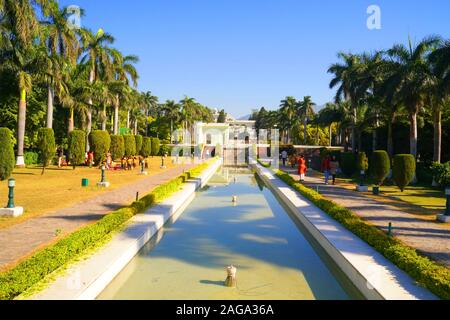
Furthermore, the management has developed an eco-friendly environment, upholding the garden's natural aesthetics and promoting sustainable tourism practices. Created in the 17th century during the reign of Aurangzeb, the garden's layout follows the traditional pattern of Mughal architecture. The Yadavindra Garden is a major lure for tourists during Baisakhi festival and The Mango festival.
- Corbusier visited Pinjore’s Mughal Garden when working on the design of Chandigarh – and it is a pity he did not learn more from the experience.
- The garden is spread across seven descending terraces, each offering a unique view and experience.
- Various competitions are held during the festival like drawing, rangoli, folk dance, and Mehendi competition.
- The area has been designed to incorporate terrace gardens, grand pavilions, and captivating fountains.
- Today, the garden continues to be one of the prime attractions of Haryana.Design of Yadavindra GardensThe Nawab designed the garden as per the classical Charbagh pattern and introduced a central waterway in the area.
There is no prior clarification of prices while taking the order, which leaves customers surprised at the billing counter.I strongly recommend visitors to ask for the price list before ordering anything. For reference, tea costs ₹90 and hot coffee costs ₹120.This pricing feels misleading, especially in a public tourist place where visitors naturally expect fair and transparent rates. The prices are not clearly visible, as the rate list is displayed on a small board placed high above the shops, which most visitors are likely to miss.
Top Cities in Panchkula
The garden also offers a light and sound show in the evening, which costs Rs. 50 per person, and Rs. 25 per child. The entry fee to the garden is Rs. 20 per person, and Rs. 10 per child. Once you reach the garden, you can explore it at your own pace and convenience, as there is no fixed itinerary or guide. From Chandigarh, you can take a bus, a taxi, or a car to the garden, as mentioned above.
This Hindu temple is believed to be built between the 8th and 11th centuries. Later during the Patiala dynasty rule, the garden was revived and reformed. The locals started believing that the water and air of Pinjore have got contaminated and they left the beautiful place to never come back. An interesting thing about the garden is that the garden was abandoned due to Goitre, a disease that is caused due to lack of Iodine intake. Situated in the foothills of the Himalayas the garden is home to rare species of flowers and plants.